Azure Blob Storage
Overview
The Azure Blob Storage connector provides a convenient way of exporting data directly from the Decentriq DMP to an Azure Blob Storage container.
Prerequisites
- Have an Azure account.
- Have an existing Azure Blob Storage container where data can be uploaded.
- Have a valid SAS token with sufficient permissions to write to the storage account and container.
Step-by-step guide
Step 1: Select the destination
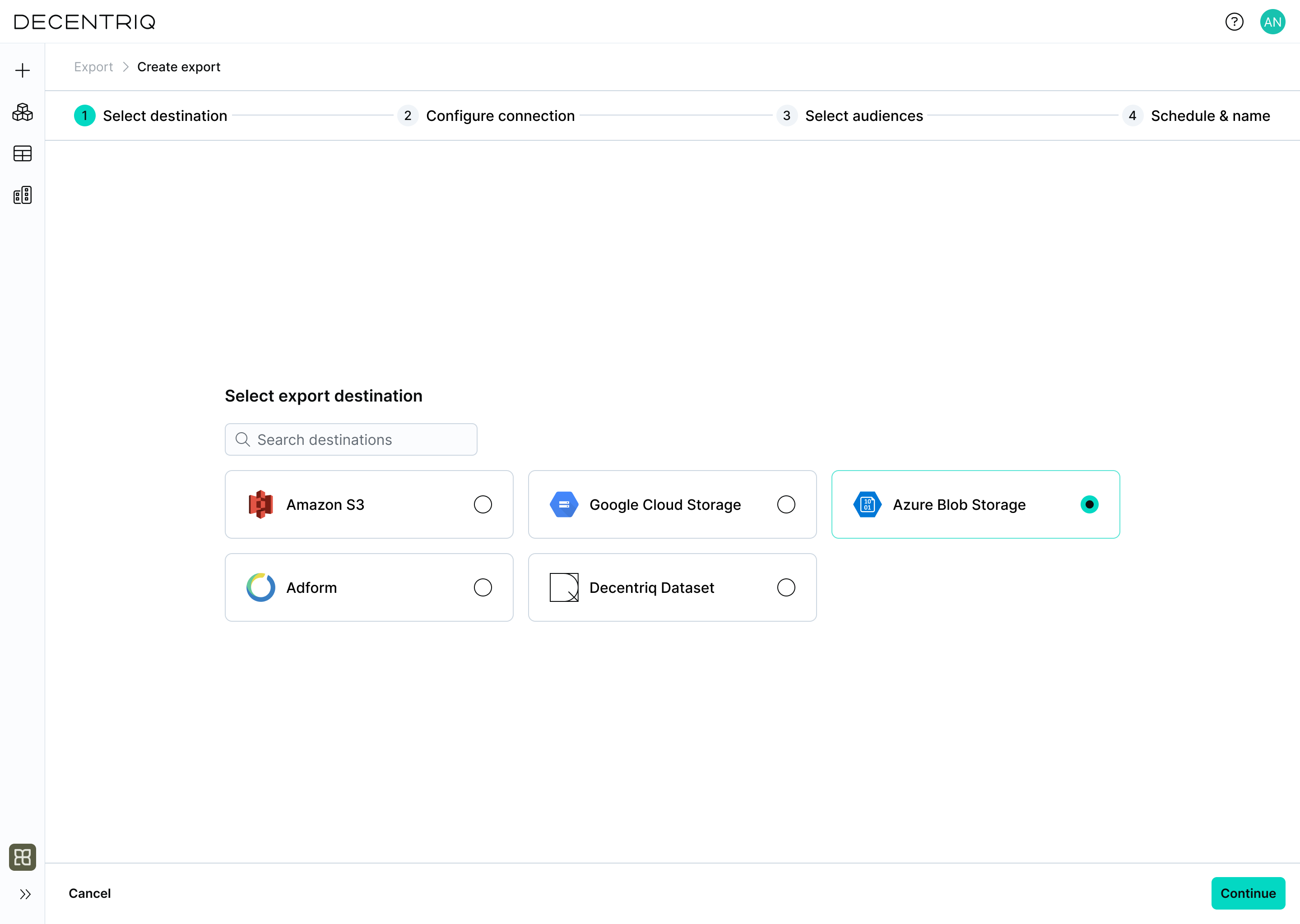
Follow the steps to create a new export and choose Azure Blob Storage from the list of connectors.
Step 2: Configure connection
Input the required information:
Storage account: Name of the storage account under which the containers are created.
This can be found by logging into the Azure Portal and selecting Storage accounts.

Storage container: Name of the container where the data should be exported.
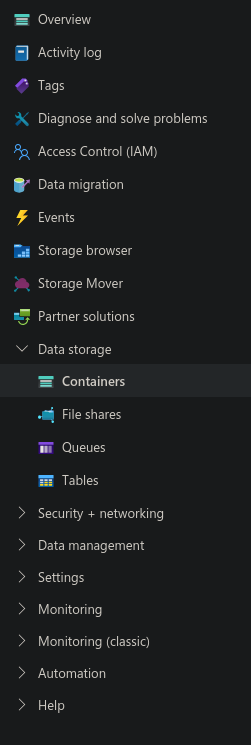
After selecting the appropriate storage account, select the desired storage container from the Data storage > Containers menu.
Credentials: The SAS token associated with the Azure storage account.
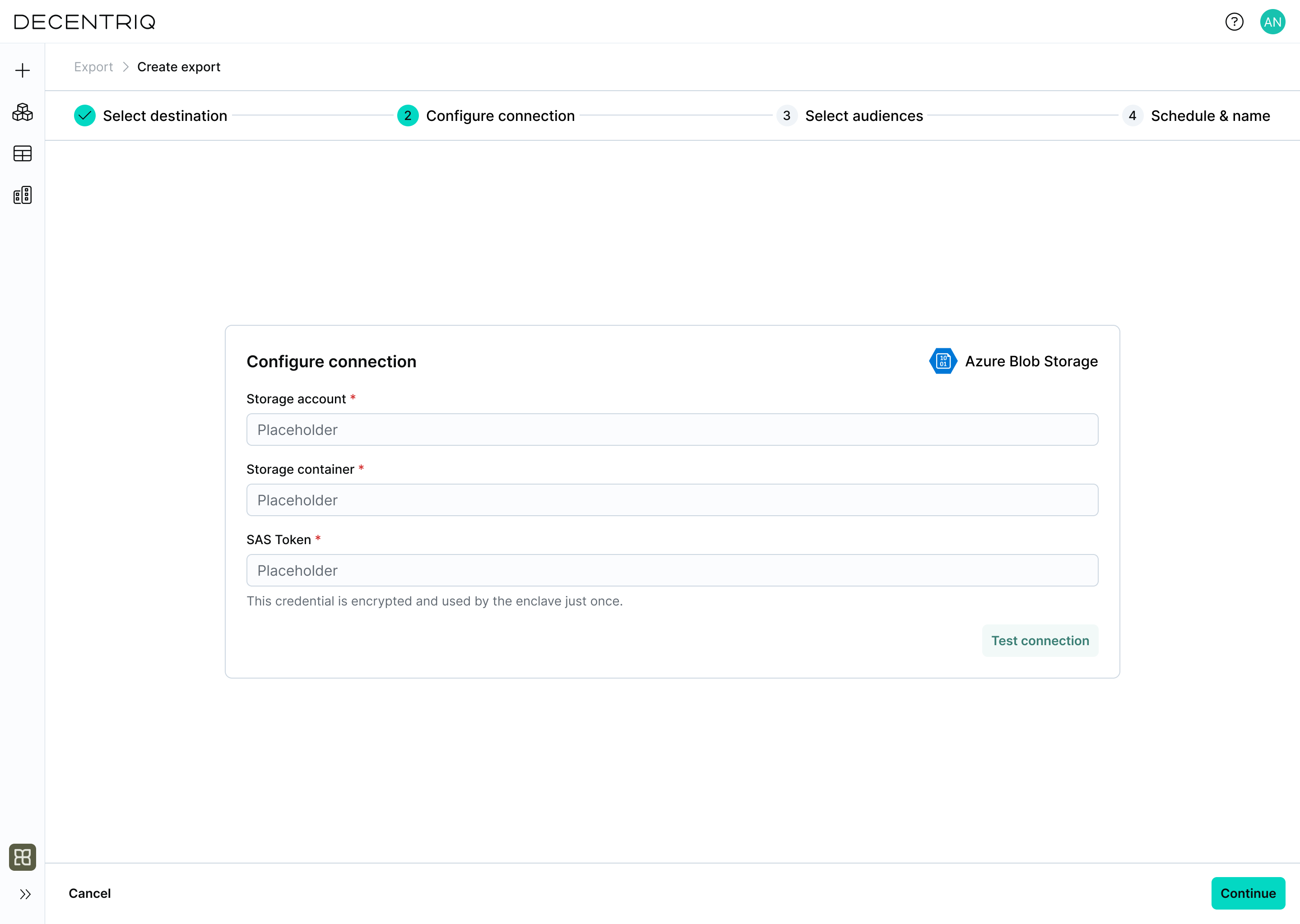
Click Test connection to verify that the credentials and configuration are valid.
Step 3: Select audiences
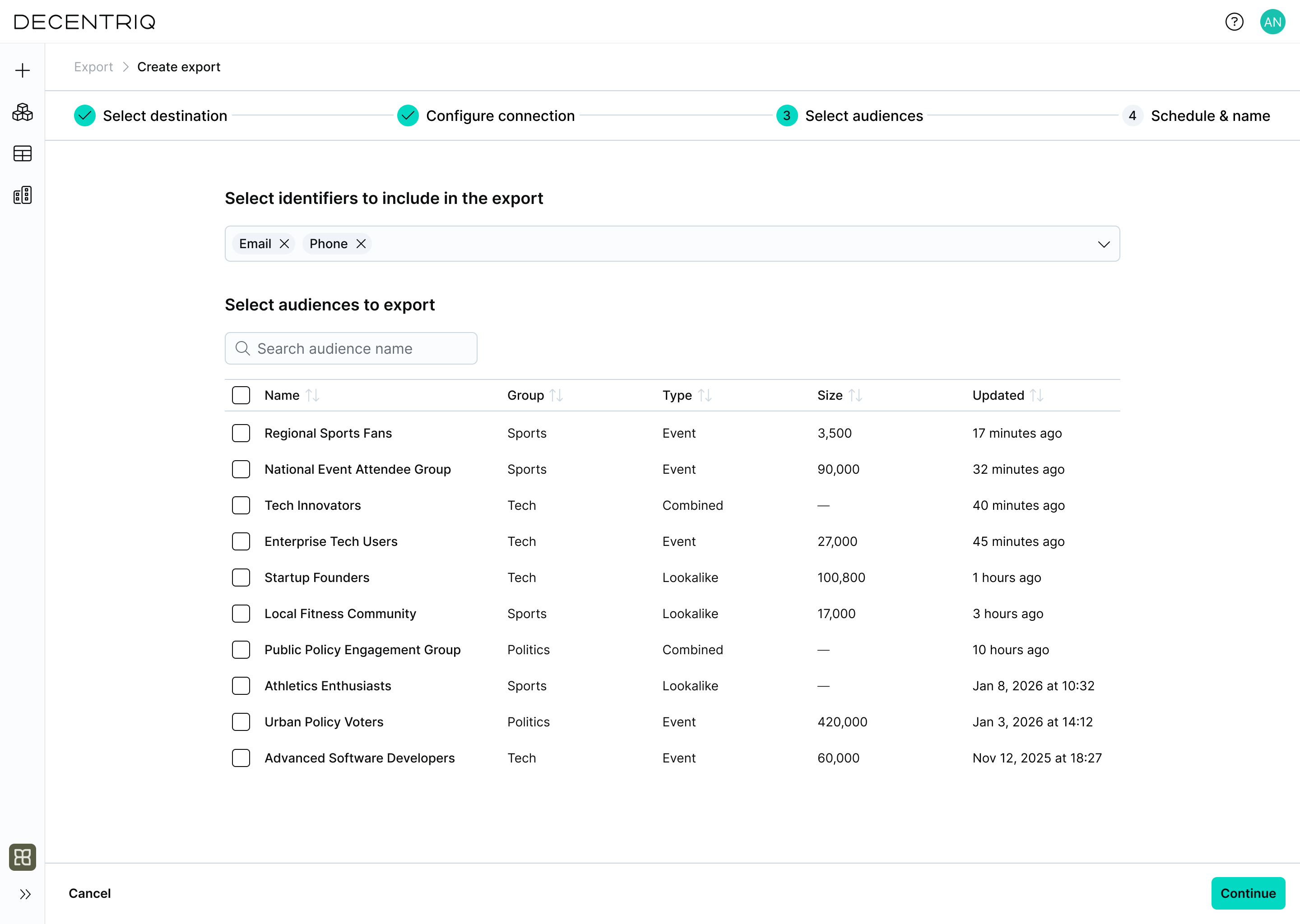
Click Continue to proceed to audience selection. Select the identifiers to include in the export and choose the audiences to export. Multiple audiences can be selected. Only users belonging to at least one selected audience will be included.
Step 4: Configure the export
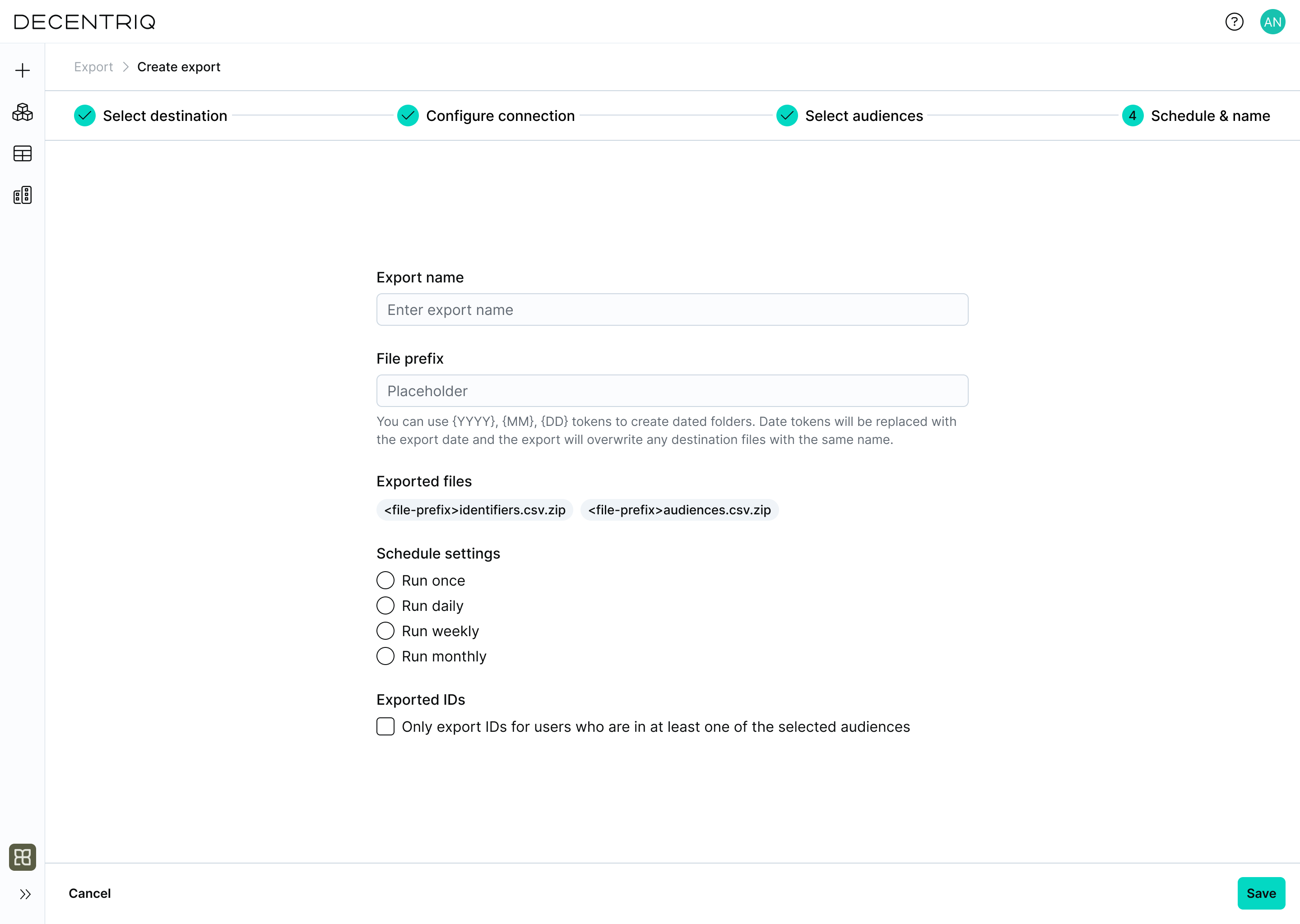
Click Continue to proceed to export configuration. Enter the export configuration:
- Export name: A user-defined name for this export.
- File prefix: An optional prefix used to structure exported files. Date tokens can be used to create dated folders.
- Schedule settings: Define how often the export should run (run once or on a recurring schedule).
- Exported IDs: Choose whether to export only IDs for users included in the selected audiences.
Step 5: Create the export
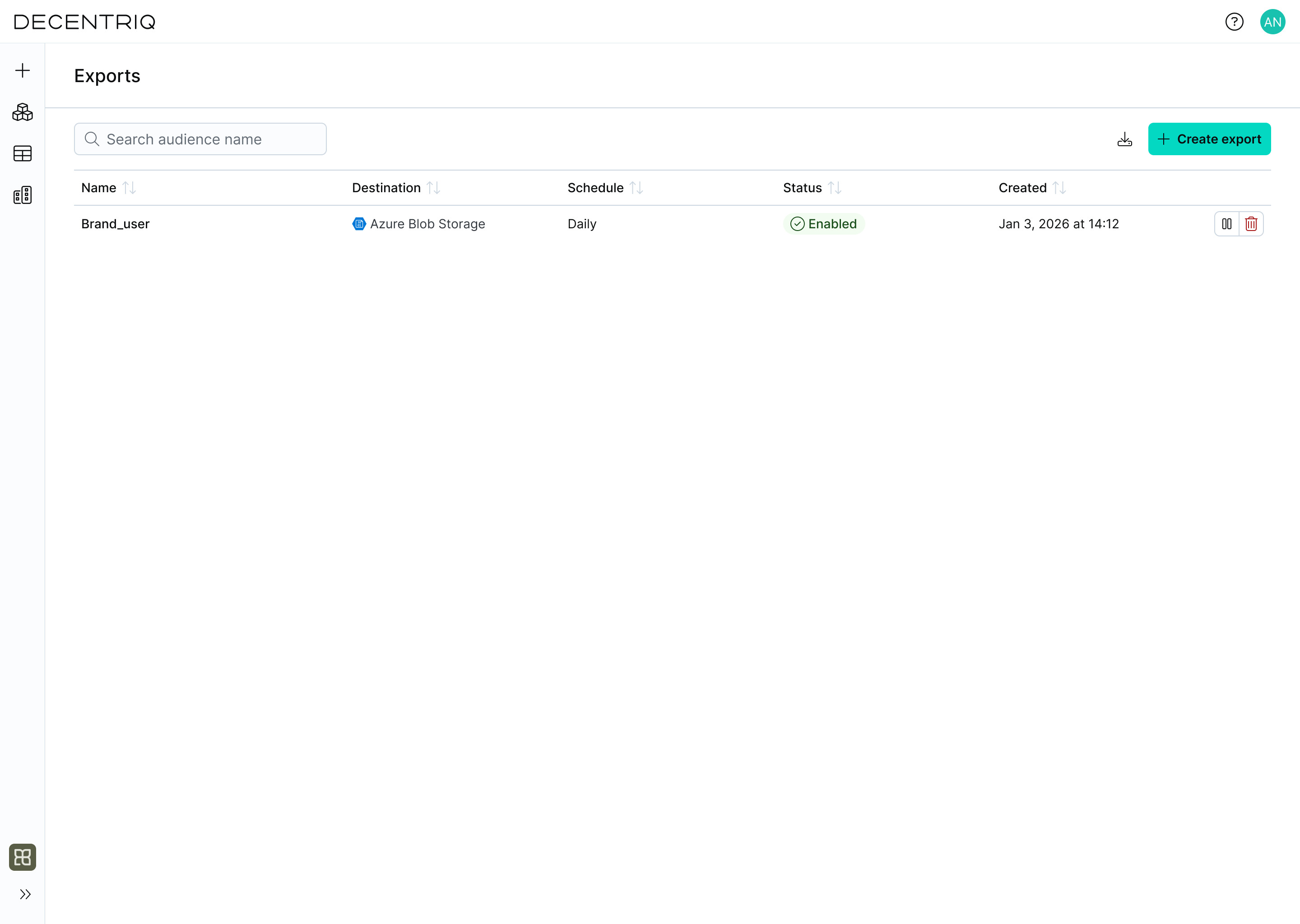
Click Continue to create the export. Once created, the export appears in the Exports table with the export name provided in the previous step. From there, you can monitor its status, review execution history, and manage future runs.